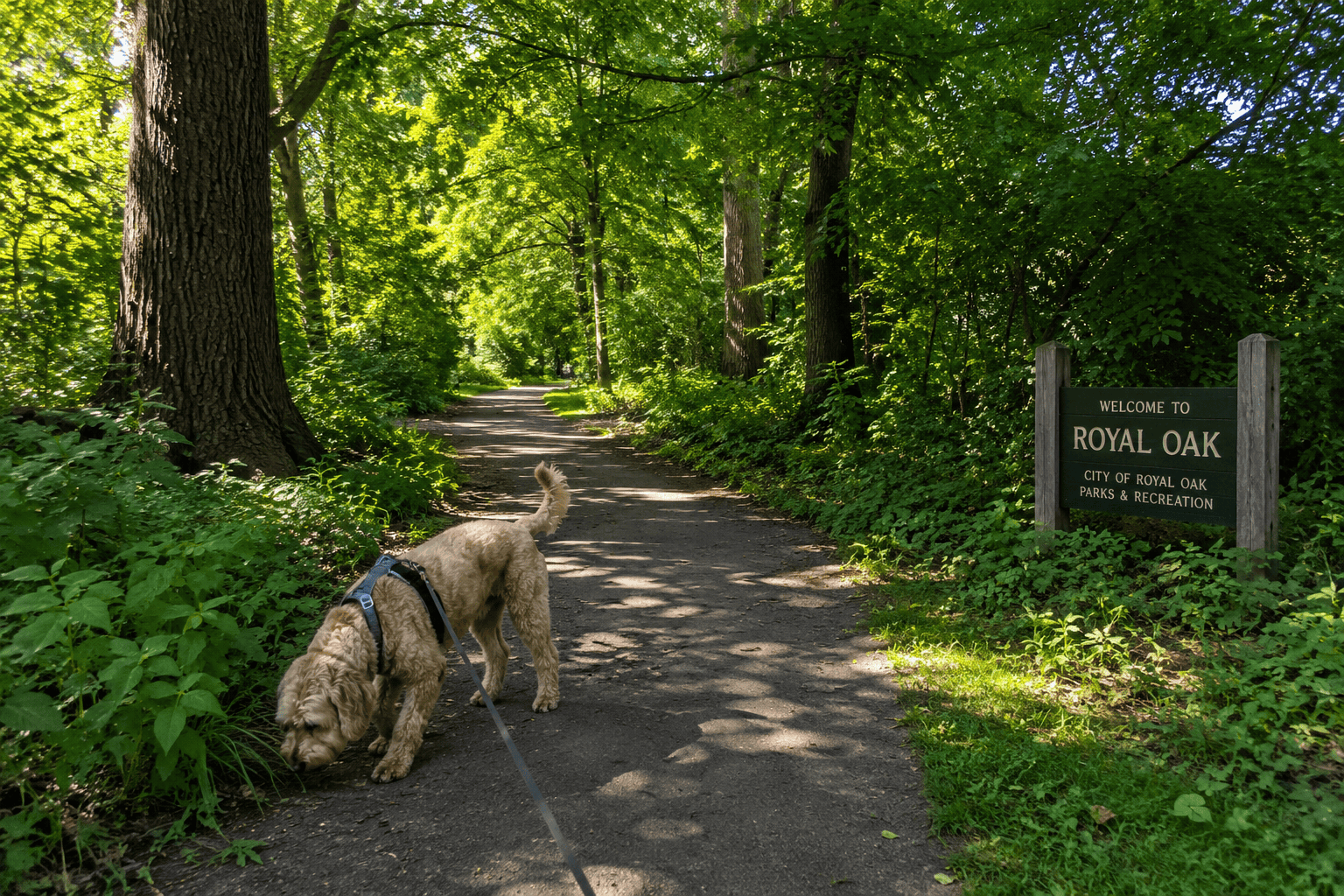
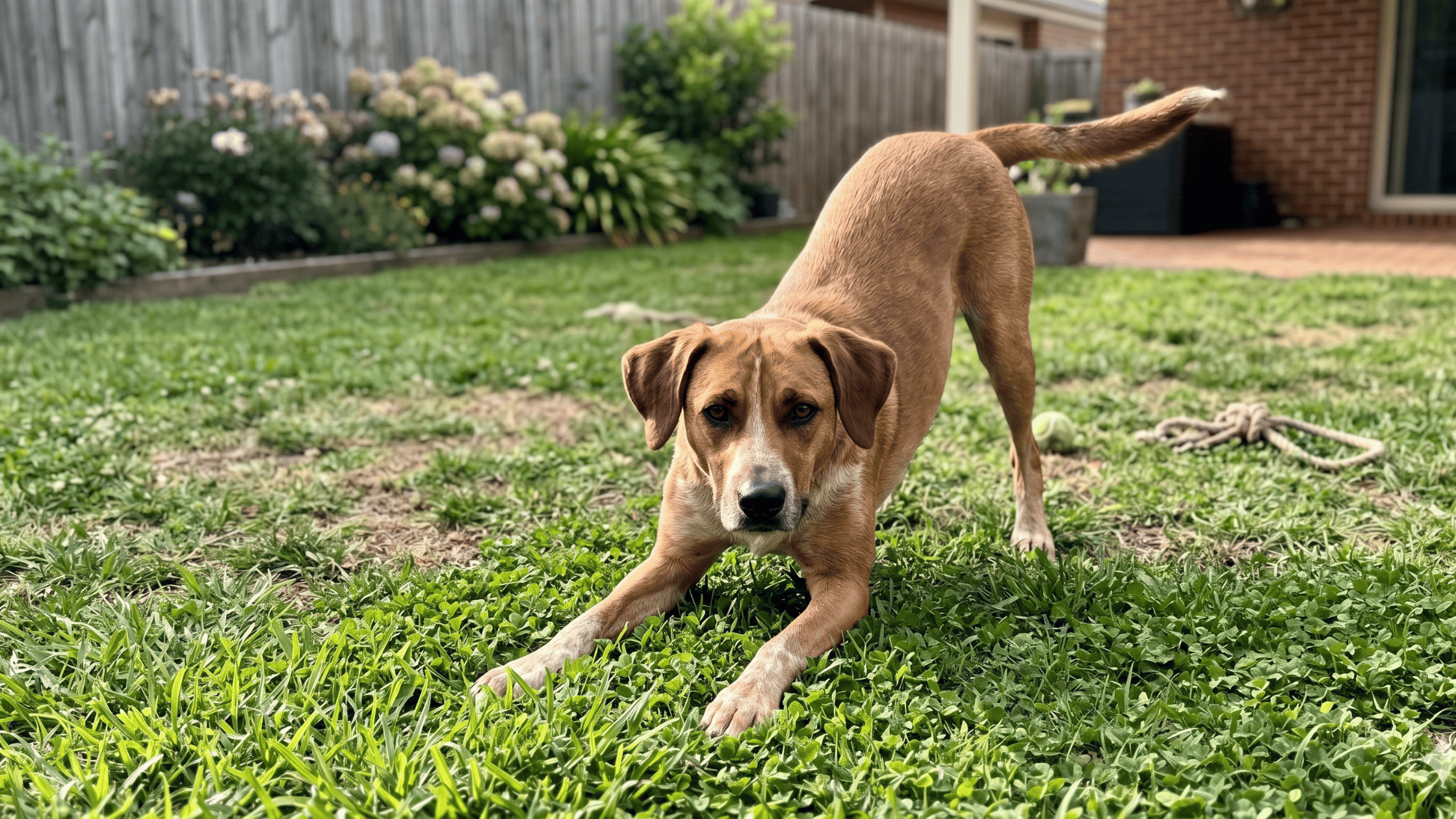
Midday dog walks in Birmingham, MI are the answer most pet parents land on once daycare stops working.
We can usually tell, within ten minutes of meeting a dog, whether the family has been doing daycare five days a week. The body shows it. The behavior shows it. The owner usually has not connected the dots yet.
Daycare five days a week sounds like the modern dog-parenting answer. It is not. The Birmingham pet parents we work with figure that out around month three. The dog stops sleeping through the night. The reactivity creeps back. The trainer they hired starts losing ground. Then they call us.
Quick Answer: Most Birmingham pet parents who switch from daycare to midday dog walks in Birmingham, MI report the same thing inside a month. The dog sleeps better. Settles faster. Stops “vibrating” at home. The reason is not mysterious. Daycare for eight hours a day, five days a week, keeps the cortisol stress hormone elevated. A 30 or 45 minute private midday walk does the opposite: bathroom break, sniff time, fresh air, then back home to actually rest. Paws Around Motown has been making this switch with Birmingham pet parents since 2014.
This post will show you the cortisol math, the behavior signs to watch for, and the hybrid most of our clients land on.
The Birmingham Daycare Default (and Why It Stops Working)
Birmingham has a lot of dog daycares. Most of them are clean, professionally run, and full. The default move for a busy pet parent is to enroll your dog and feel like the problem is solved.
For some dogs, it is. The lab who came from a working farm, never met a stranger he did not like, sleeps through anything: daycare three or four days a week probably suits him fine.
For most Birmingham dogs, that is not the situation. They’re the rescue who already had one rough start. The reactive shepherd from your trainer’s caseload. The puppy who is still figuring out who she is. The senior who hates being away from home. These dogs do not benefit from being thrown into a thirty-dog room for eight hours, five days a week. They survive it. There is a difference.
We get the calls when daycare stops working. The pattern is consistent enough that we can name the symptoms before the owner finishes the sentence. We see it in dogs from every Birmingham neighborhood, from Quarton Lake to Pembroke to Holy Name, downtown apartments to Poppleton family homes.
What Does Cortisol Do to a Dog Five Days a Week?
Cortisol is the dog’s stress hormone. It rises during arousal: barking, running, meeting new dogs, navigating noise, getting bumped, defending toys, getting corrected, posturing. A daycare environment is full of all of those triggers, in a tight room, with no off-switch.
In a normal day, cortisol rises during exercise or excitement, then drops back to baseline within a few hours. That is healthy. The dog rests, the body recovers, and the next day starts fresh.
In a daycare-five-days-a-week routine, cortisol does not have time to drop back. The dog comes home wired, drinks water, sleeps shallowly, and goes back into elevated arousal the next morning. After a few weeks, the baseline itself climbs. The dog stops fully relaxing at home. Sleep gets fragmented. Behavior issues that were under control resurface. Reactivity gets worse. New dogs get added to the “no” list. The owner thinks the dog is “going through a phase.”
It is not a phase. It is chronic stress, and most pet parents do not see it for what it is until it has been compounding for months.
Decades of veterinary behavior research, including the clinical work of behaviorists like Dr. Karen Overall, points consistently to one finding: dogs need real rest as much as they need exercise, and chronic overstimulation produces measurable behavioral and physiological consequences. The American Veterinary Medical Association’s animal welfare resources cover this in detail for pet parents who want the deeper science.
What a Midday Dog Walk in Birmingham, MI Actually Looks Like
Here is what one of our midday visits looks like in Birmingham. The walker arrives at the time you booked, usually between 11 a.m. and 2 p.m. They greet your dog calmly, get the leash on, refill the water bowl on the way out, and head into your neighborhood.
The walk runs 30 or 45 minutes, depending on what you booked. It is not a sprint. The walker reads your dog’s body language, picks the route based on traffic and trigger density, and lets your dog stop and sniff (which is the actual point). Sniffing is a high-value enrichment activity. It produces more mental fatigue per minute than physical exercise alone, which is why a sniff-heavy 30-minute walk often tires a dog out more thoroughly than a brisk 30-minute jog.
After the walk, your dog gets water, a treat (if you’ve approved them), and a quiet house. The walker leaves you a photo report and a note about anything they saw. A favorite tree, a new neighbor’s dog, a slight limp, a chewed slipper. Then they lock the door and your dog goes back to actually resting until you come home.
That is the day. There is no thirty-other-dogs spike. No barking pen. No transit time. No detox period after. Your dog gets bathroom relief, mental enrichment, and a structured break. Then sleep.
For most Birmingham dogs, that is the right shape of a workday.
The Hybrid Most Birmingham Pet Parents Actually Land On
Very few of our clients drop daycare entirely. The honest, practical answer most Birmingham pet parents arrive at is a hybrid:
One or two daycare days a week for socialization and a tired-out night. Two or three midday walks a week for routine, decompression, and bathroom breaks on the long days you’re stuck at the office until 6.
That mix gives your dog the social benefit of daycare without the cortisol cost. We can help you do the math on what your specific case looks like at your meet-and-greet.
We do not push every client toward this hybrid. If your dog truly thrives at daycare five days a week, we will tell you. The point is matching the schedule to the actual dog.
A Realistic Weekly Schedule for a Birmingham Working Family
Here is the typical pattern we see with Birmingham professionals. The owner is in office Tuesday, Thursday, and one other day per week. They are remote Mondays and Fridays. The dog is a 4-year-old mix who used to do five daycare days, started showing reactivity a year ago, and worked with a trainer for several months.
A working schedule we would build for that dog:
Monday. Owner home. Brief outdoor breaks throughout the day. No PAM visit unless the owner has back-to-back meetings.
Tuesday. PAM 30-minute midday walk at noon. Owner home by 6.
Wednesday. One daycare day. Drop-off at 8, pick-up at 4. The dog gets the social piece.
Thursday. PAM 45-minute midday walk at 12:30 (longer than Tuesday because the previous day was higher arousal and the dog needs more decompression).
Friday. Owner home. Optional brief PAM visit if the owner has a heavy-meeting day.
Three midday walks. One daycare day. Two flexible days where the owner handles things or books on demand. The dog’s cortisol gets a chance to drop. Sleep improves. Reactivity work from the trainer holds.
Most of our clients land within one walk of this template. We adjust based on your work pattern, your dog’s age, and what your trainer (if you have one) is working on.
A second pattern: the work-from-home Birmingham parent
The other version we see all the time is the parent who works from home but still needs help. The dog is a 2-year-old high-energy mix. The owner is on Zoom calls back-to-back from 9 to 4 most days. Being home does not mean being available.
A working schedule for that household:
Monday and Wednesday. PAM 45-minute walk at 11:30, before the parent’s afternoon meeting block. Pup comes home tired and the parent gets a quiet two hours.
Tuesday and Thursday. Owner takes the dog out briefly between meetings. No PAM visit needed.
Friday. Trail Hike. (A Trail Hike is our private solo hiking adventure: about two hours total with at least an hour of guided, on-leash hiking on a dog-friendly trail matched to your dog’s fitness. We pick up at home and bring them back tired and calm. One household’s dog at a time, never a group hike.) The dog is genuinely tired for the rest of the day.
Weekend. Family time, hikes, or down days as the family prefers.
That is a different shape, but the same principle: structured decompression and real bathroom breaks, not constant low-grade arousal. We see this pattern often with Birmingham professionals in tech, finance, and law.
What to Ask Before You Trust Your Dog to a Birmingham Midday Walker
If you are coming out of a daycare relationship that is not working, the next walker your dog meets matters more than the average hire. The dog is already strung tight. The wrong walker makes it worse.
Five questions we tell every Birmingham pet parent to ask before booking:
Are you bonded and insured, and can you show proof? Most app-based walkers are not. The legal exposure if something goes wrong (your dog gets hurt, escapes, hurts another dog or a person) lands on you. A real professional has both bonding and care/custody/control insurance, and will produce documentation.
What certifications does your team carry? “I love dogs” is not a credential. Look for CPDT-KA (Certified Professional Dog Trainer), Pet First Aid & CPR, and any specialized handling certs. Our entire team is trained on all three. Becky also holds the Certified Shelter Dog Trainer credential, earned working with reactive and rescue dogs, and Megan is a certified obedience trainer.
What is your backup-walker policy? Your regular walker will eventually get sick, take vacation, or have a personal emergency. Ask what happens to your dog that day. With a side-hustler, the answer is usually “you scramble.” With our team, the next-most-familiar walker takes the visit, never a stranger.
Can you handle medication? If your dog is on insulin, allergy shots, oral medications, or anything topical, your walker needs to know exactly what to do. Our team is trained on oral, topical, and injectable medication administration, and we coordinate directly with your vet’s protocols.
Will you meet my dog before the first paid visit? Any walker who skips the meet-and-greet is skipping the most important diagnostic step. We require a 30-minute meet-and-greet at no charge before any service is scheduled, so your dog is not handed off to someone they have never seen.
If a walker hesitates on any of those questions, keep looking.
What Are the Signs Daycare Is Not Working for Your Dog?
If you are not sure whether daycare is the right fit anymore, these are the signs we tell every Birmingham client to watch for. If you are seeing two or more of these, it is time to think about a switch.
The dog is “off” for the day after daycare. Not tired-content. Crashed-out and brittle.
Sleep gets weird. Pacing at 3 a.m. Trouble settling at night. Waking from naps fast.
Reactivity returns. Lunging at the window, barking at neighbors, snapping at houseguests, pulling harder on leash.
Daycare keeps “asking you to take a few days off.” This is a signal the daycare staff are seeing escalation in your dog. They are usually right.
Your trainer says the dog regressed. This is the one that costs the most to ignore. If your trainer is telling you progress stalled, look at the daycare schedule first.
Appetite changes. Eating less, eating fast, food guarding when there was not any before.
None of these are deal-breakers in isolation. Combined, they are a pattern. The pattern usually clears up within two to four weeks of swapping some daycare days for midday walks.
Frequently Asked Questions About Midday Dog Walks in Birmingham, MI
How long should a midday dog walk be? For most adult Birmingham dogs, 30 minutes is the right midday length. Active or large-breed dogs often do better with 45 minutes. Puppies under four months should get shorter, more frequent visits. Senior dogs are usually best with 30 minutes plus a longer rest before and after.
How fast will I see a difference after switching from daycare to midday walks? Most Birmingham pet parents notice a change inside the first two weeks. Sleep improves first, usually within a week. Reactivity and behavior take longer to settle, two to four weeks for most dogs, longer for dogs whose chronic stress was deeper. We tell families to watch for sleep, body posture, and the speed at which the dog settles when you come home as the early indicators.
Is the same walker assigned every visit? Yes. Paws Around Motown assigns one primary walker to your dog so you build a relationship. If your regular walker is sick or out, the next-most-familiar walker on our team takes the visit, never a stranger.
Do I get photos and a report after every walk? Yes. Every visit ends with a photo report and notes from the walker. You see where the walk went via GPS in real time. Notes include anything the walker observed, like a limp, a missed greeting, or a behavioral shift you would want to mention to your vet.
Can I do walks just two or three days a week? Yes. Most of our Birmingham clients book two to four walks per week, not five. We work with whatever schedule fits your life. The most common pattern is Monday, Wednesday, Friday or Tuesday, Thursday.
What if I want to keep some daycare days too? Most of our clients do. We will plan around your daycare schedule and cover the days the daycare does not work for you. A lot of clients use us on Mondays (after a busy daycare weekend) and Fridays (when the dog is depleted from the week).
Will a midday walk help my dog with separation anxiety? For mild to moderate separation anxiety, yes, often significantly. Breaking the workday into chunks reduces the total alone-time stretch and gives the dog a predictable middle-of-day reset. For severe cases, midday walks are part of the answer but not the whole answer. Becky and Megan also offer in-home force-free behavior work specifically for separation anxiety. We can evaluate at your meet-and-greet.
Is a midday walk too much for a senior dog? Generally, no, and often it is the missing piece. Senior Birmingham dogs do better with shorter, more frequent visits than long sessions. We adjust pace, route, and length for senior pets. If your senior is on medication, our team is trained on oral, topical, and injectable administration including insulin, so you do not need to coordinate a separate visit for meds.
Do you walk in bad weather? Yes, with judgment. We walk in light rain, snow, and cold (with weather-appropriate gear). In severe heat, severe cold, or active thunderstorms, we shorten the visit to a quick bathroom break and indoor enrichment time so your dog still gets the relief without the safety risk.
Ready to Try the Hybrid?
The next step is a 30 minute meet-and-greet. We come to your home, meet your dog, walk through your neighborhood, and answer every question you have. No pressure, no contract, no fee. We will talk about your current daycare schedule, what you are seeing in your dog, and whether a hybrid would actually help.
Schedule a meet-and-greet, or read more about Becky and the team before you reach out. We’ve been doing this in Birmingham since 2014. We would be glad to put together a walk schedule that fits your dog.